Educational Resources and Opportunities

2026-2027 Georgia History Festival
Connecting Classrooms and Community

The Georgia History Festival is the signature K-12 educational program of the Georgia Historical Society (GHS), reaching hundreds of thousands of students statewide. Beginning with the new school year in September, a variety of public programs, exhibits, events, and educational resources bring history to life for students of all ages and encourage Georgians to explore the richness of our state’s past. In addition to new online and in-person programming, the Festival includes popular annual events, such as the Colonial Faire and Muster living-history program; Super Museum Sunday, the Georgia Day Expo, and the Governor’s induction of two modern-day Georgia Trustees at the elegant Trustees Gala.

2026-2027 Festival Focus of Study
From Town Halls to the National Mall: Civic Engagement in American History

Each year, GHS selects a significant topic in Georgia's history as the focus of the Festival’s educational programs and resources. During the 250th commemoration of the founding of the United States, GHS programs, resources, and publications explore the vital role that democratic institutions play in sustaining a republican form of government.

As part of the Georgia Historical Society’s US250 commemoration, the 2026-2027 Festival will explore the vital role of citizenship, voting, constitutional amendments, and the history that has shaped them in Georgia and the United States. Students will examine how the right to vote and the meaning of citizenship have expanded, evolved, and been challenged over time, from the founding era through the modern civil rights movement and beyond. We will also examine the role of frequent, free, and open elections and the foundational notion, first established by Washington, that in this self-governing republic those elected hold power in the name of the people, and they must all surrender power peacefully and without violence when the people have spoken. Aligned to the Georgia Standards of Excellence, this study will support students’ understanding of the historical struggles, constitutional developments, and civic responsibilities that continue to shape participation at the local, state, and national level in American democracy today.


New Classroom Resources

Citizenship is more than a legal status, and it is more than voting. Citizenship is the way people participate in their communities, understand their rights and responsibilities, and work with others to strengthen public life. A series of Georgia Standards of Excellence-aligned lessons challenge students to explore what it means to be an active and responsible citizen at school, in their community, in Georgia, and in the United States and what the history of civic engagement looks like in the United States and Georgia.

Citizenship in Everyday Life

The citizenship lessons begin with the idea that civic responsibility starts with everyday choices. Students are asked to consider how people help make a classroom, school, neighborhood, city, state, or country work well. For younger students, this may include being kind, helping others, following rules, telling the truth, listening, taking turns, and caring for shared spaces. These actions may seem small, but they help students understand that citizenship is practiced long before a person is old enough to vote.


For upper elementary and middle school students, the lessons build a deeper understanding of rights, responsibilities, and civic participation. Students examine the difference between having a right and carrying out a responsibility. They learn that rights, such as speech, assembly, petition, voting, and due process, allow people to participate in public life. At the same time, responsibilities, such as staying informed, obeying laws, serving communities, and respecting the rights of others, help democracy function.

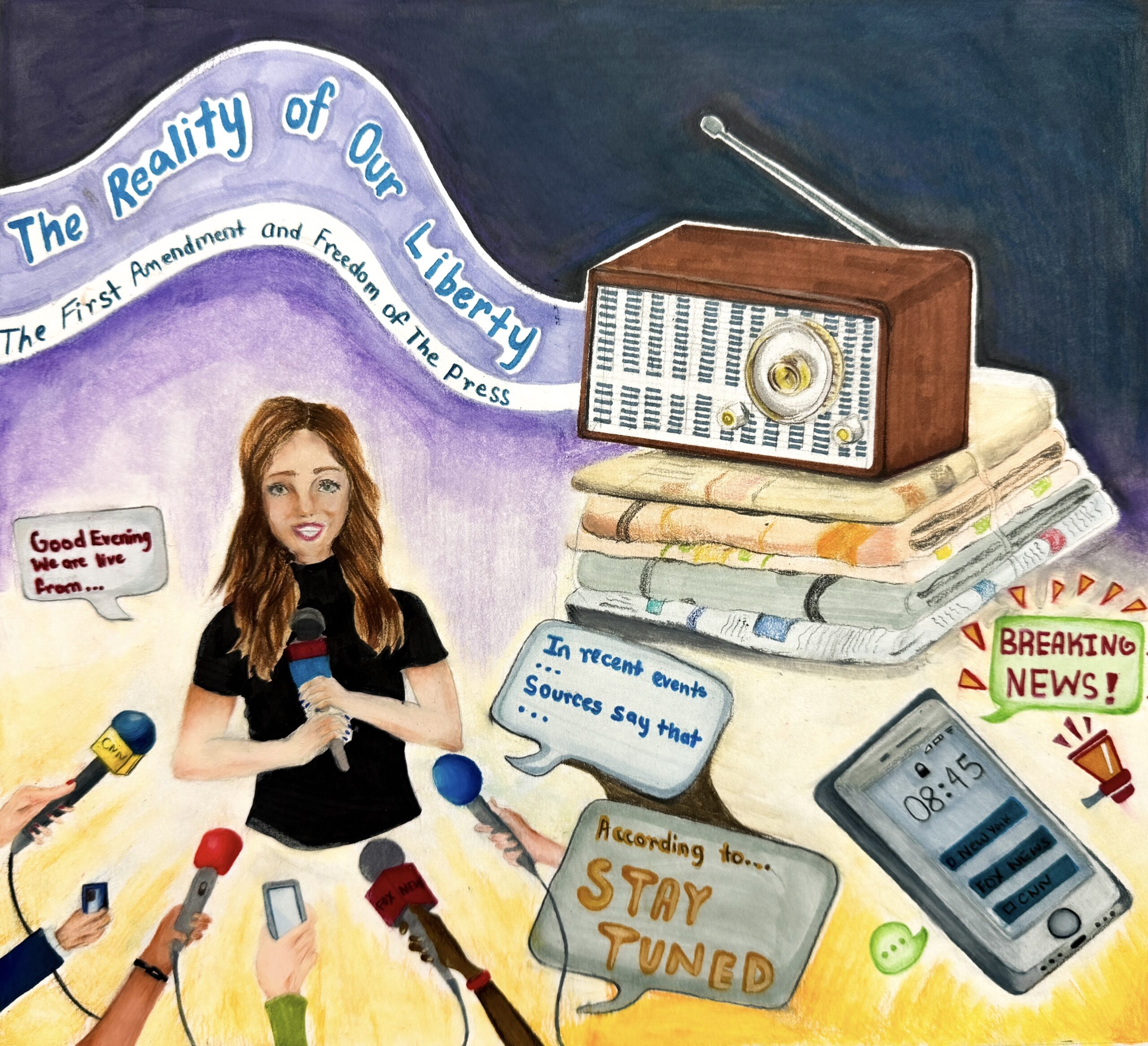
Staying Informed and Media Literacy

One of the most important responsibilities of citizenship is staying informed. Citizens need accurate information to make thoughtful decisions, understand public issues, and participate responsibly. In today’s information environment, this also means students need media literacy skills.

From a historical perspective, the same skills historians use to evaluate primary sources can also help people understand modern information. Historians do not simply accept a document, photograph, speech, or newspaper article at face value. They ask who created it, when it was created, why it was created, what evidence it provides, what perspective it reflects, and what other sources can confirm or challenge it. Those same questions are just as useful when reading a news article, watching a video, looking at a social media post, or deciding whether an online claim can be trusted.

In both history and modern media, information has a source, a purpose, and a point of view. A primary source from the past may reveal important evidence, but it may also include bias, exaggeration, missing context, or limited perspective. Modern information works the same way. A post may contain a true fact but leave out important details. A headline may be technically accurate but designed to make people angry or afraid. A photo or video may be real but presented in a misleading way. By using historical thinking skills, students can slow down, ask better questions, compare sources, and make more informed judgments about what they see and share.

For middle school students, media literacy should focus on foundational habits. Students should learn how to identify credible sources, separate facts from opinion, recognize emotional language, notice when a headline is designed to get attention, and check information before sharing it. Middle school students should begin to understand that not all information is equally reliable, even when it looks polished or appears online.


For high school students, media literacy should move deeper into analysis. Students should compare multiple sources, evaluate evidence, recognize bias and point of view, understand algorithms, examine how images and language shape interpretation, and consider how media messages influence public opinion. High school students should be encouraged to ask who created a message, what evidence supports it, what perspective is included, what perspective may be missing, and why the message was created.

Teachers can connect media literacy directly to citizenship. Responsible citizens do not need to know everything, but they do need to know how to ask better questions. Staying informed is not passive. It requires attention, judgment, and care.

The Three Branches of Government and Checks and Balances

The three branches lesson helps students understand how the United States Constitution divides and limits government power. Students learn that the legislative branch makes laws, the executive branch enforces laws, and the judicial branch interprets laws. They also learn that no branch has all the power.

The lesson introduces students to separation of powers and checks and balances. Separation of powers means government authority is divided among different branches. Checks and balances mean each branch has some power to limit or influence the others. This system was designed to prevent one person or group from becoming too powerful.

For younger students, the lesson focuses on identifying each branch, understanding its main job, and recognizing basic examples of checks and balances. For high school students, the lesson moves further into constitutional reasoning. Students examine why the Framers worried about concentrated power and why conflict between branches was built into the system. Examples may include presidential vetoes, congressional overrides, Senate confirmations, judicial review, executive orders, impeachment, war powers, and congressional oversight.

This lesson connects directly to citizenship because citizens need to understand how power works in a constitutional democracy. Knowing how the government is structured helps students understand where decisions are made, who has authority, how power is limited, and how citizens can respond when they want the government to act.

Voting and Voting Rights

Voting remains one of the most important responsibilities of citizenship. Through voting, citizens help choose leaders and shape laws, policies, and public priorities. Students should understand that voting connects citizenship to representation and political power.

At the same time, students should learn that voting rights in the United States did not expand in a simple or steady path. Access to the ballot changed over time through state laws, constitutional amendments, court cases, federal legislation, civic activism, and public debate. In Georgia and across the United States, voting rules have included requirements related to property ownership, taxes, residency, registration, race, gender, age, citizenship, criminal convictions, and other qualifications.

This could also be useful for Georgia Studies Teachers as a refresher on voting history.

The voting lessons help students examine how access to the ballot expanded and contracted over time. Students should understand that the right to vote has been connected to larger debates about citizenship, equality, representation, federalism, and political power. They should also understand that voting rights were not simply handed down from one generation to the next. Many people organized, protested, petitioned, litigated, lobbied, and campaigned to gain or protect access to the ballot.

More Classroom Resources

Check back soon for more information!

Civil Conversations with Dr. Stan Deaton

Dr. Stan Deaton, the Dr. Elaine B Andrews Distinguished Historian, discusses civic engagement with community leaders, examining how and why they  got involved in public service and why citizen engagement is so important.


Georgia Day Video

In recognition of the anniversary of Georgia’s founding, this short online program is a visual exploration of the colony’s founding and early development. Featuring greetings from friends and leaders across the state, this all-ages presentation includes classroom resources for varying grade levels connecting the video to the Festival theme.

New educational activities aligned to the Georgia Standards of Excellence will connect the story of the founding to civic engagement throughout Georgia’s history.


Informational Videos

What is the Georgia History Festival and how can you participate?

Educators will be introduced to the 2026-2027 Georgia History Festival theme and activities.  The video will highlight specific online and in-person resources and events that utilize GHA’s unique collection of archival materials to support classroom engagement around Georgia and American History.

Georgia Day Expo Informational Webinar

December 2026
An informational webinar for educators, parents, chaperones, etc. to learn about the annual Georgia Day Expo, which will take place in February, 2027.

Schedule of Events

Please join us for these Georgia History Festival events that bring history to life for students of all ages!


An Evening with Alan Taylor
September 10, 2026 | 7:00 p.m. | Savannah
Join the Georgia Historical Society as author and historian Alan Taylor is inducted as the 2026 Vincent J. Dooley Distinguished Teaching Fellow and then discusses his groundbreaking scholarly work and publications.


From Poll Taxes to Protests to the Presidency: How Civic Engagement Changed America in the 20th Century
October 14, 2026 | 7:00 p.m. | Atlanta
Dr. Kevin Gaines of the University of Virginia will explore how civic engagement changed America in the years following World War II.


Colonial Faire and Muster
February 6-7, 2027 | Wormsloe State Historic Site, Savannah
This popular living-history programs explores life in eighteenth-century Georgia through cooking, dancing, craft, and military demonstrations. Fees apply on Saturday, but admission is free on Sunday.


Super Museum Sunday
February 7, 2027 | Multiple sites statewide
Explore history, arts, and culture in communities throughout Georgia as over 100 museums and historic sites across the state open to the public for free during this popular event organized as part of the annual Georgia History Festival.


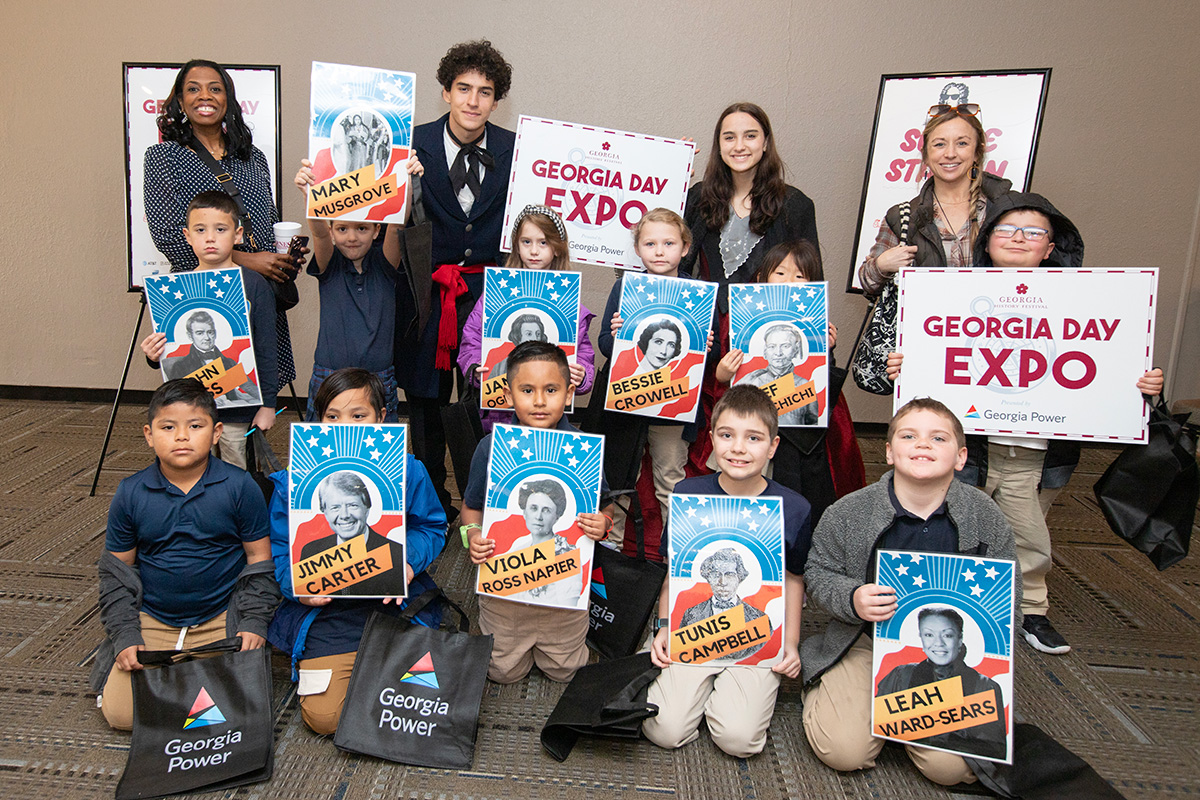
Georgia Day Expo
February 2027 (Date TBD) | Savannah
Students explore Georgia history through demonstrations and hands-on activity booths during this commemoration of the founding of Georgia at Savannah.


Georgia History Festival Savannah Conversation
Date: TBD
Join GHS President and CEO Dr. W. Todd Groce and GHS Senior Historian Dr. Stan Deaton for an engaging and timely discussion inspired by the 2026-2027 Georgia History Festival theme of civic engagement in American history.


Trustees Gala
April 24, 2027 | Savannah
Join the Georgia Historical Society and leaders from across the state as we induct the 2027 Georgia Trustees, two exemplary Georgians whose history-making accomplishments and service reflect the original Trustees’ ideals.

Georgia Day Expo in Savannah

February, 2027

Students explore Georgia history through demonstrations and hands-on activity booths during this commemoration of the founding of Georgia at Savannah on February 12, 1733. Educators, parents, historical interpreters, and community and civic leaders take part in this fun and engaging program that utilizes an all-weather, indoor venue to encourage students to explore the Georgia History Festival theme, From Town Halls to the National Mall: Civic Engagement in American History.

Geared for elementary, with a focus on second grade students studying Georgia history.

Open to public, private, and home school groups with prior registration.

Details will be announced soon! 

Field Trips to the
GHS Research Center

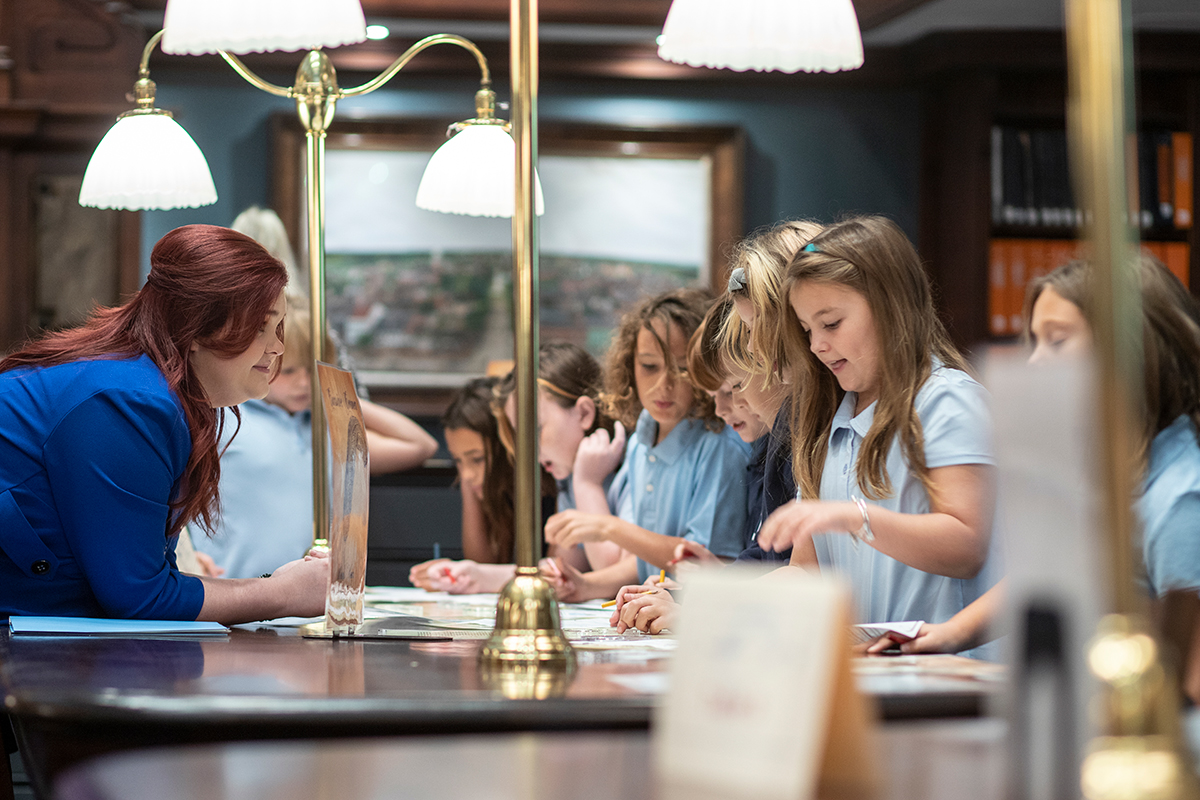
During the school year, GHS will host field trips to the Research Center. Field trip options will include a theme-based Research Round-Up, designed to show K-12 students how to conduct primary and secondary source research using materials from the GHS collection.

Field trips may be scheduled for Tuesday mornings, from 10:00 a.m. – 12:00 p.m. Limit 30 students per program.

To learn more please email education@georgiahistory.com or visit georgiahistory.com/field-trips.